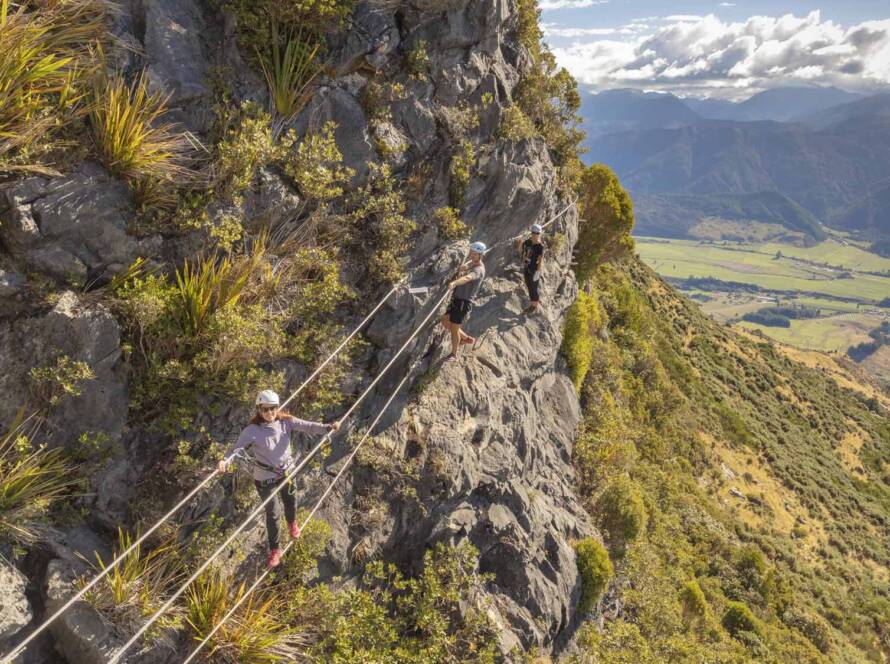
Via ferrata climbing in Aotearoa / New Zealand.
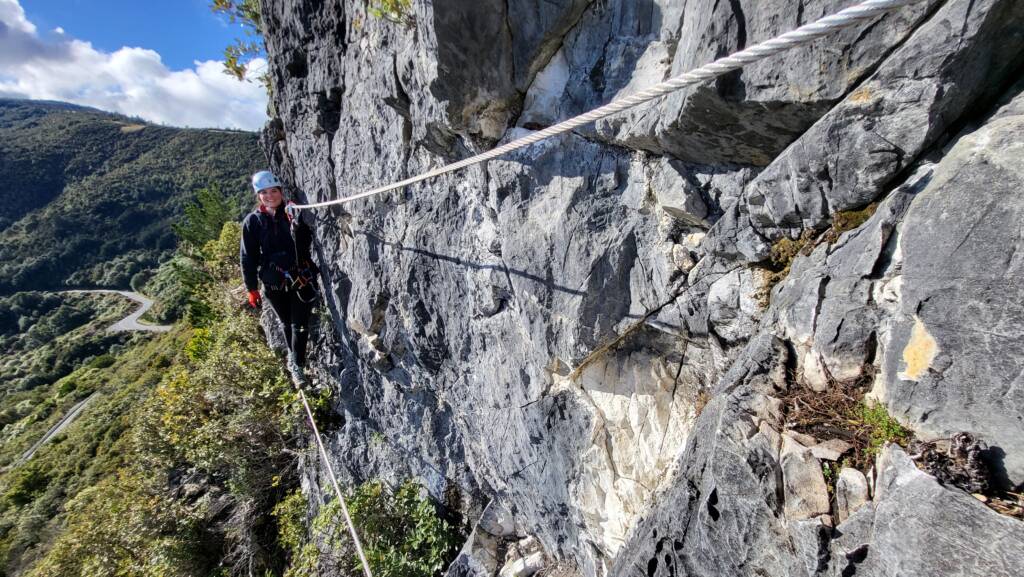
Via ferrata climbing is just getting started in New Zealand so here’s the locations and what you need to know. There are only two via ferrata routes, both in the South Island. The Tākaka Hill via ferrata is a free and public route in the Nelson-Tasman region, and Wildwire is a commercially operated route near Wānaka. The peak body for the development of routes, and the sport, in New Zealand is Via Ferrata Aotearoa and more free and public routes are in the planning stages.
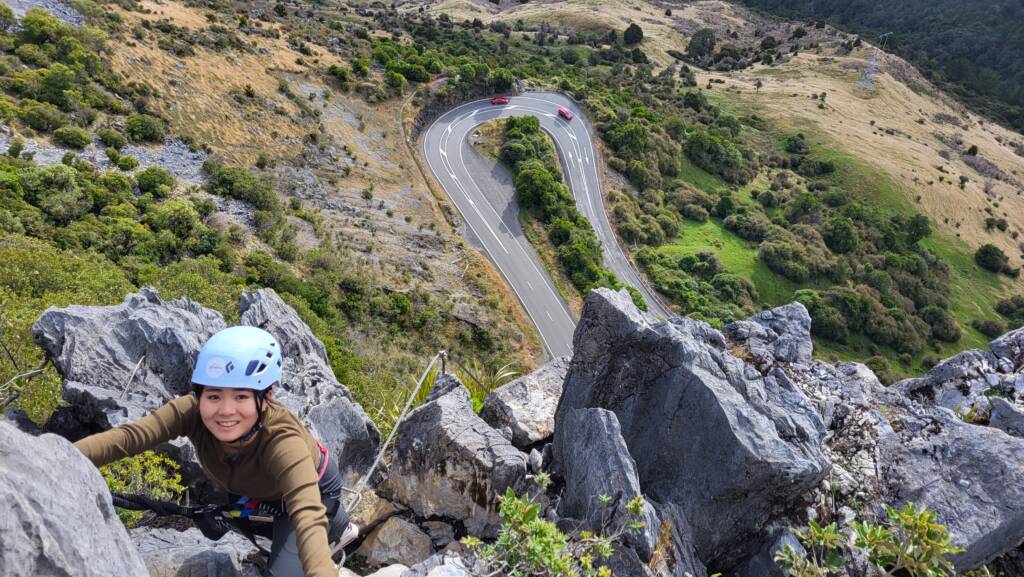
Tākaka Hill
Located at the top of the South Island in the Tasman-Nelson region. This region is best known for sunny weather, fruit growing, beaches, and national parks. The Tākaka Hill via ferrata is in two sections, the Cliff Traverse (grade C) and the Cliff Conqueror (grade D). The starting point is a car park at the top of the Tākaka Hill Highway and a round trip to the summit and back takes 3-4 hours.
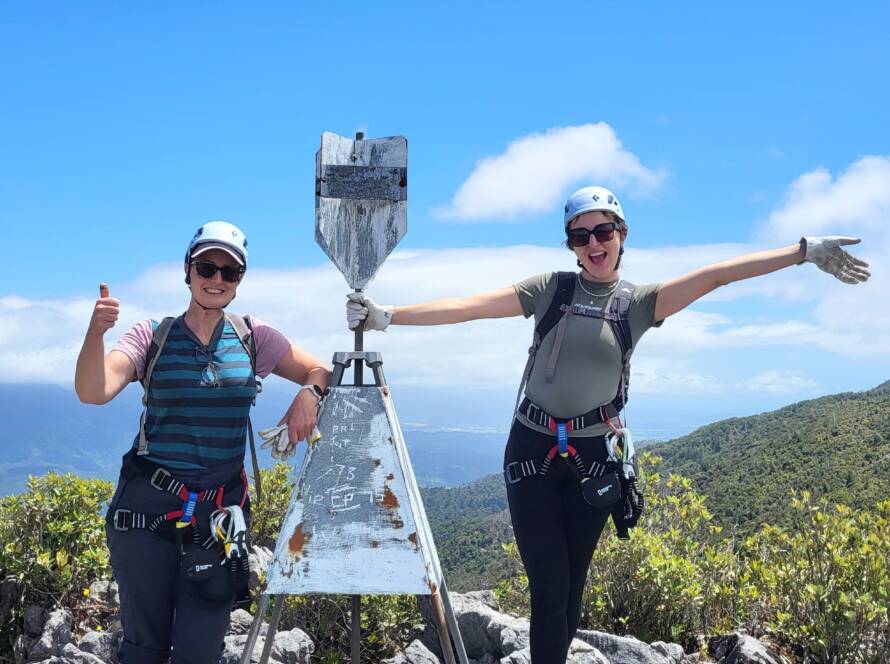
The summit is at 900m above sea level but the route is climbable all year round. Safety gear can be hired at the nearby Ngārua Caves, or guided tours operate daily. Contact Takaka Hill Adventures for guided tours.
Wildwire near Wānaka
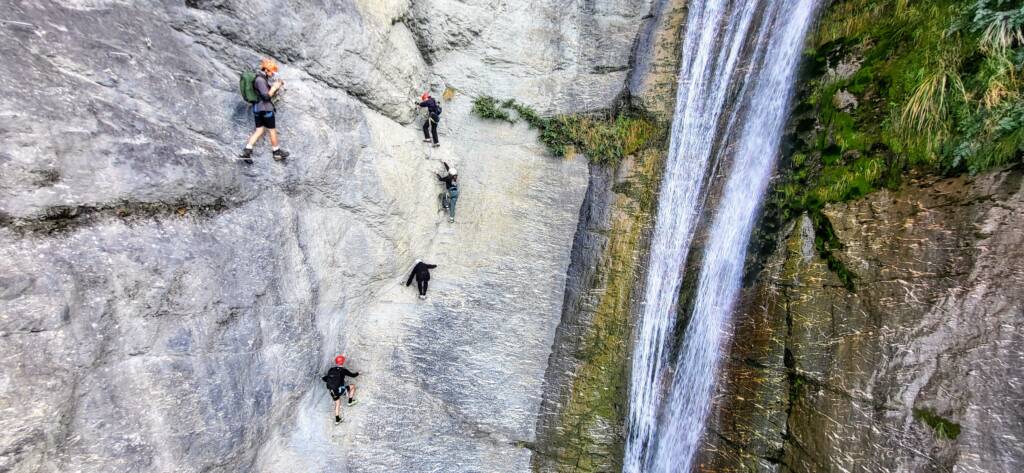
The Wānaka-Queenstown area is well known for stunning mountains, lakes, and skiing. Wildwire opened the longest waterfall wire climb in the world back in 2015. The climbing season here is August to the end of May.
Weather and seasons
The South Island has 4 distinct seasons. The big mountains are in the south so winter there is colder. Summer is December to late March and the best weather is January to April. Weather in New Zealand can change quickly, especially in the mountains, so always be prepared.
Best way to travel
Public transport in New Zealand is not great for tourists and holiday makers. It is best to have a car or camper van. There are plenty of places to camp, including holiday parks with full facilities and basic remote sites. Camper van buy-back programs are a great option if you are staying 90 days or longer.
What you need
Safety equipment such as helmet, harness and lanyards can be hired or will be provided by the guiding company. Firm footwear such as lightweight walking boots are best but trail runners are OK. Always take a jacket or warm layer when hiking or climbing in the mountains.
The clear skies in New Zealand are lovely but the sun is stronger. It is best to cover-up if you are having a day outdoors. Stretch leggings or lose trousers are ideal. Sun hats are essential. T shirts and shorts may be necessary in summer but protect skin with sunscreen.
More Information
Visit these website for more information.